Adhesive residue is not one problem, so there is no single solvent for it. Rubber and hot melt adhesives soften with oil and heat; acrylic adhesives need a solvent. The surface decides which of those you are allowed to use, and getting that order wrong is how a cosmetic job becomes a repaint.
Identify the adhesive before touching the surface
Rubber-based and hot melt adhesives feel tacky and smear into a grey ball when you rub them. Acrylic adhesives stay firm and come away in flakes. The first group responds to warmth and a little oil; the second needs isopropyl alcohol or a dedicated adhesive remover.
Test in a corner that will not be seen, and wait ten minutes before judging. Some solvents look harmless for the first minute and then lift the topcoat. If the surface is more valuable than the time saved, mechanical removal with a plastic scraper and a warm hairdryer is the safest first move on every substrate.
Painted and plastered walls
On emulsion paint, heat and a plastic scraper will shift most residue; alcohol will often take the paint with it. Work with a hairdryer on medium, soften the residue, and roll it off with a thumb rather than picking at it.
Avoid acetone and cellulose thinners on any painted wall. If the residue has already bonded to the paint film, the honest answer is that the patch needs touching up rather than cleaning. On wallpaper, stop at the dry method - almost every liquid will mark the paper.
Wood and laminate
On sealed wood, isopropyl alcohol on a cloth is usually enough and evaporates before it can raise the grain. On unsealed or oiled wood, use the dry method only: warmth, a plastic scraper, and patience.
Never flood a laminate joint. Water and solvent both wick into the core through the seam and swell it, and the damage appears a day later as a lifted edge rather than as a stain. Apply solvent to the cloth, not to the floor.
Plastic, vinyl and car paint
Rigid plastics tolerate alcohol; soft vinyl and most interior trim do not, and will haze or soften. Car paint is the most unforgiving surface in this list: alcohol is acceptable on cured paint, acetone and nail varnish remover are not, and a hot air gun will blister clearcoat long before it softens the adhesive.
For badges and trim, dental floss behind the adhesive and a warm soak is slower but leaves nothing to correct afterwards. Where a residue has been baked on for years, expect to polish the area afterwards - the adhesive has usually protected the paint beneath it, so the clean patch reads as a lighter rectangle against the surrounding fade.
Making residue unlikely in the first place
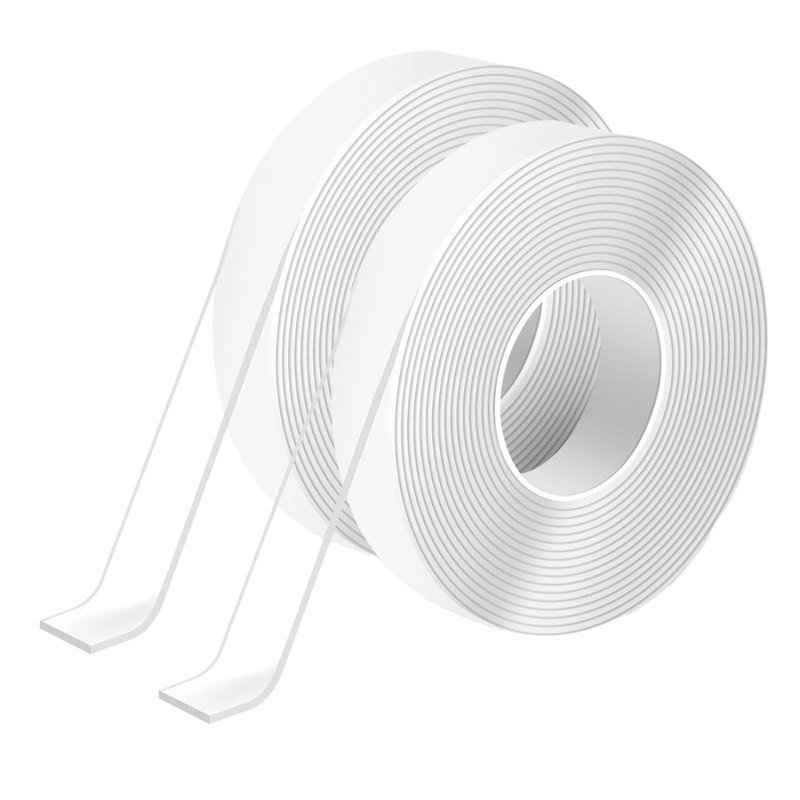
The cheapest fix is the tape, not the solvent. A removable or low-tack adhesive leaves a clean surface by design, and a nano-type reusable tape can be lifted and repositioned without leaving a film. Specify removability as a property of the product, rather than treating residue as an installation accident.
For anything applied to a wall, a display or a temporary fixing, ask for the removable grade and test it on the actual substrate before the run. We supply removable nano adhesive tape from 20 pieces, which is small enough to test on a real wall rather than a sample board.
How removability is measured, if you want to compare grades
Removable is not a single property, and a supplier who quotes it without conditions is describing a feeling rather than a specification. Three measurements separate a genuinely removable tape from one that only looks removable on the day of application.
- Peel after 20 minutes on painted plasterboard: how much force to lift, and does the paint come with it
- Peel after 7 days on the same surface: the number that decides whether a cleaner is needed at all
- Residue after 7 days at 40 C: whether a film remains once the strip is gone, and whether it wipes off dry
The 7-day figure is the one that matters commercially. Most complaints about residue do not come from the first removal, they come from the second one a fortnight later, after the adhesive has had time to migrate into a porous surface or cross-link on a warm wall.