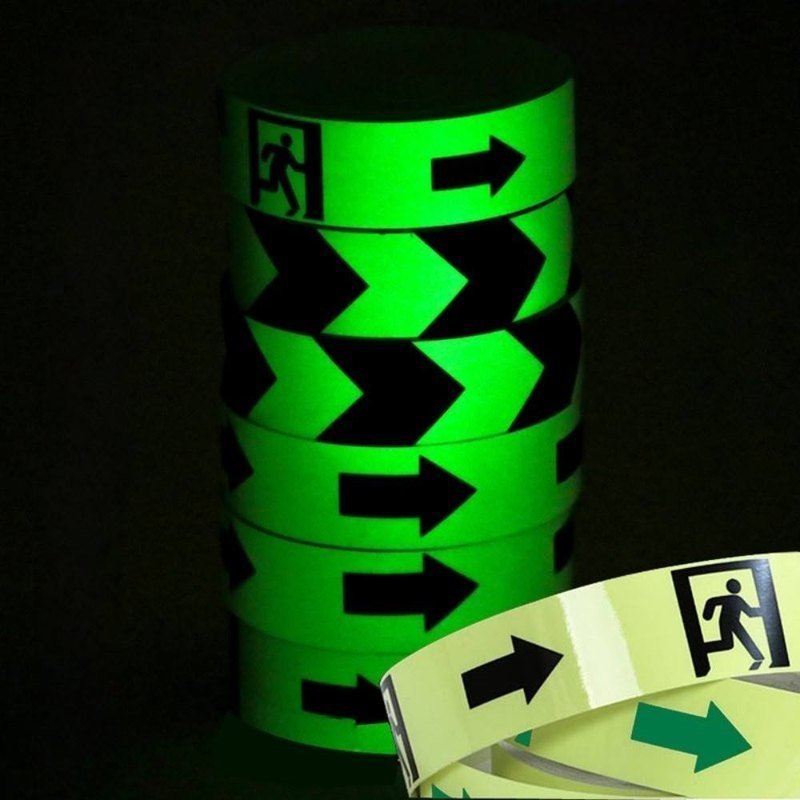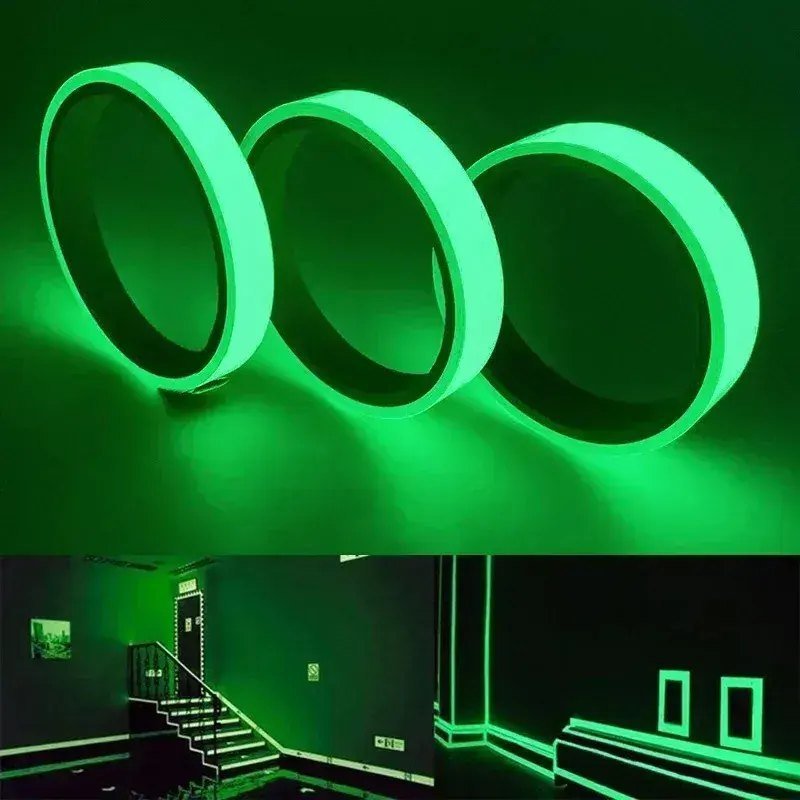

A luminous path works only if it is continuous and leads somewhere. Interrupted strips, gaps at racking legs and lines that stop at a doorway give a false sense of direction in smoke. Plan the route from the furthest aisle to the nearest exit, then mark both sides of the walkway at low level so the line stays visible below a smoke layer.
Charging light is part of the design
The tape is only as good as the light it receives. Areas that are dark during operating hours will not charge, and a strip under deep racking may never reach useful brightness. Where ambient light is insufficient, add a dedicated charging source or choose a higher pigment class rather than assuming the tape will perform.
Specifying for a facility
Decide the class, the width and the substrate in that order. A 50 mm strip is common for walkway edges, 25 mm for directional arrows and door frame markers. Concrete needs a primer, sealed floors need degreasing, and steel columns need the coating checked before application. Ask for luminance values at defined intervals, not a single brightness figure.
- Luminance measured after 10 minutes, 60 minutes and 8 hours
- Adhesive type matched to concrete, coated steel or racking
- Width and layout shown on a drawing, not described verbally
- Replacement schedule written into the maintenance plan
Inspection after handover
Luminous markings collect dust, and a dirty strip can lose much of its visible output. Include them in the cleaning schedule with a non-abrasive neutral cleaner. Inspect quarterly for lifting edges and physical damage, and replace sections rather than patching, because a joint in a dark corridor reads as the end of the path.