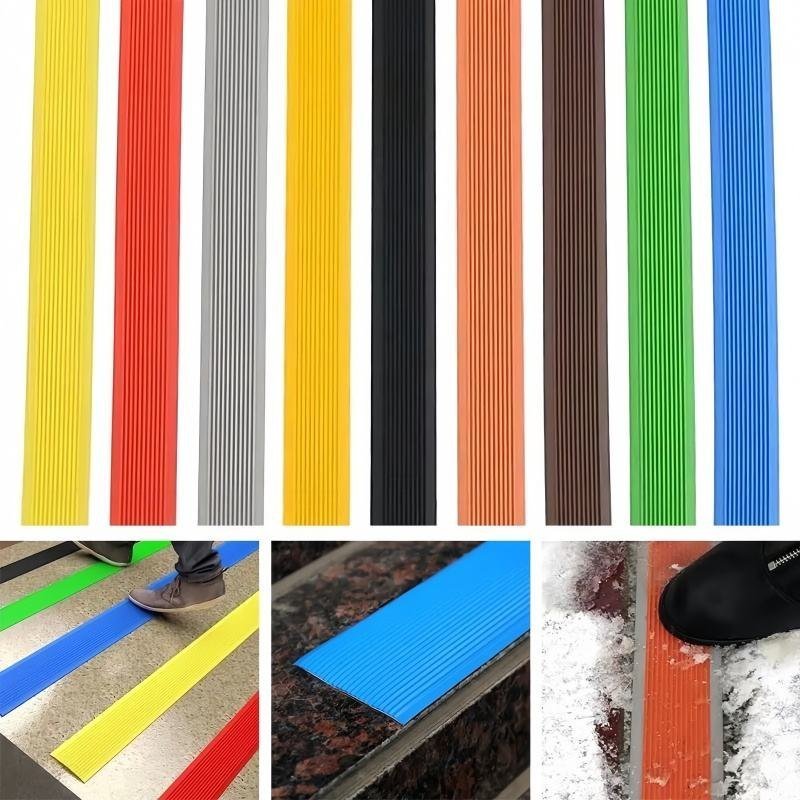
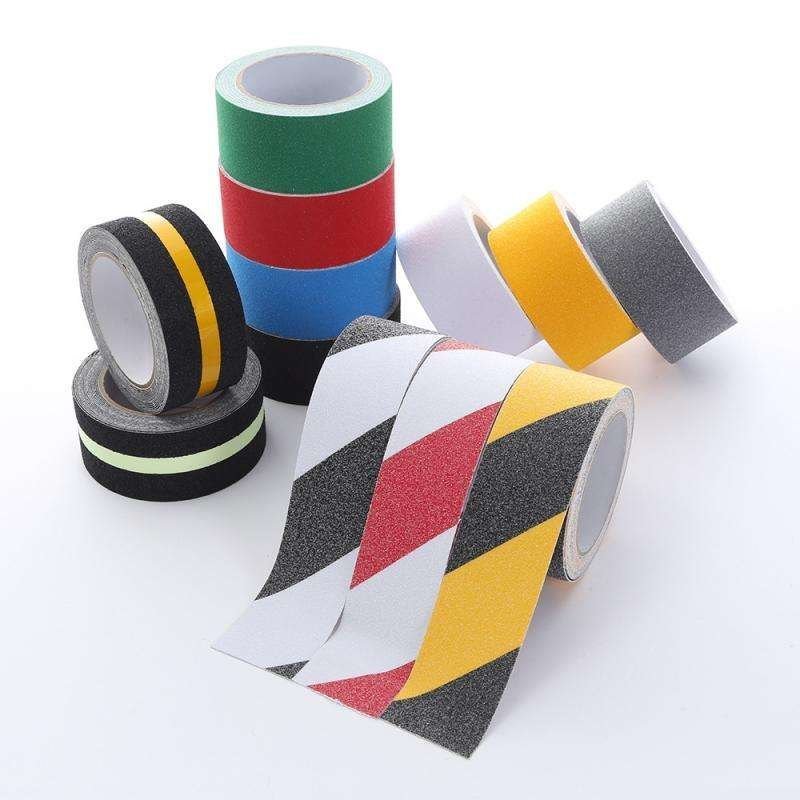
Ladder rungs are narrow, often curved and sometimes only 25 mm deep, so a straight cut from a roll leaves lifted corners that catch a boot. Die-cut strips with rounded corners and a matching radius last far longer. For OEM ladder production, the tape is usually supplied on a kiss-cut sheet so an operator can peel and place without measuring.
Profile and grit choice
A 0.7 mm grit tape is enough for a domestic step stool, while industrial ladders benefit from a thicker, 1.0 mm product with a coarser grit. Aluminium rungs are often extruded with a shallow flute, and the tape must bridge the flute rather than sink into it. A slightly stiffer PET backing works better than a soft PVC film on this profile.
- Domestic step stool: 25 mm by 100 mm strips, medium grit
- Industrial ladder: full rung width, 1.0 mm backing, coarse grit
- Platform steps: 50 mm strip plus a second strip at the front edge
- Marine or outdoor ladder: acrylic adhesive and sealed edges
Bonding to aluminium and fibreglass
Aluminium carries a thin oxide layer and often a release agent from extrusion, so a solvent wipe with isopropyl alcohol is essential. Fibreglass can weep styrene from a fresh moulding and needs a longer cure before tape is applied. In both cases, a primer improves the result and is usually cheaper than the labour of a rework.
Testing and packing
A simple pull test on a production sample catches most bonding problems: apply, roll, wait 24 hours, then try to lift an edge with a fingernail. For shipments, flat sheets protect die-cut parts better than rolls, and a card between layers prevents the liner from bonding under stack weight. Buyers should confirm the sheet count and the direction of the cut before approving artwork.