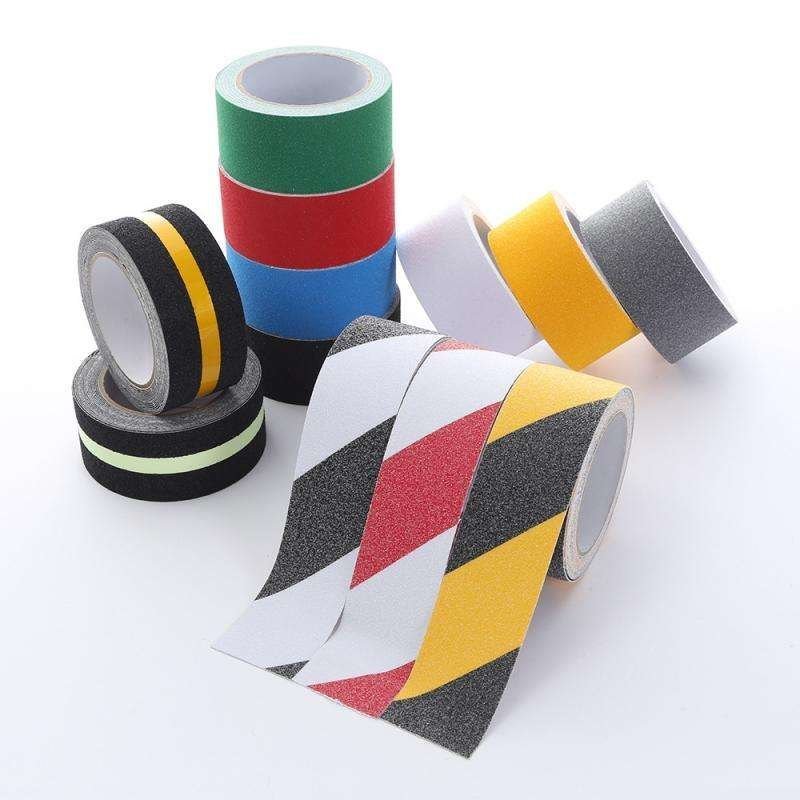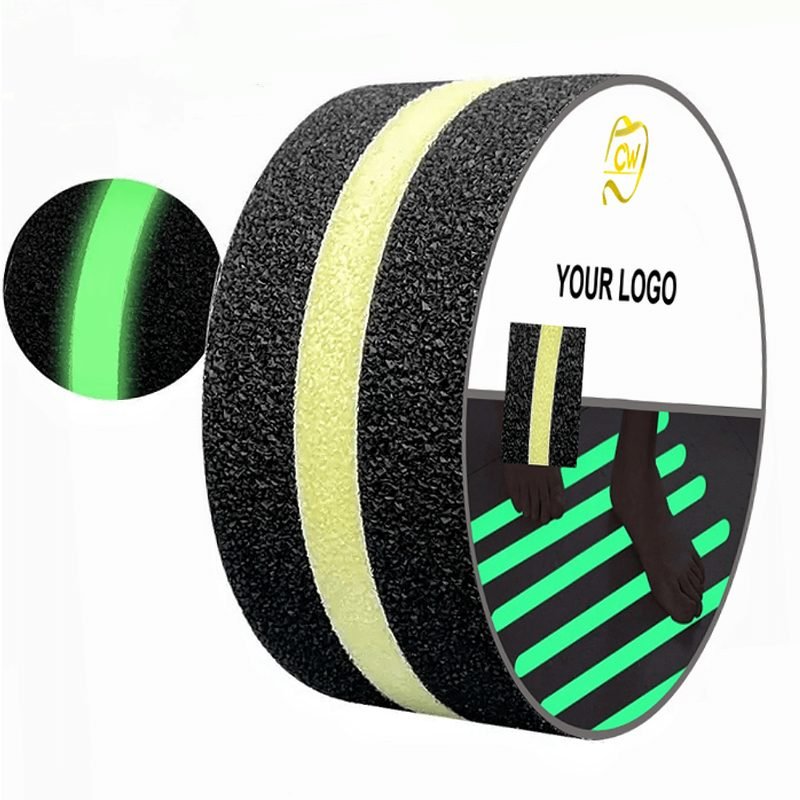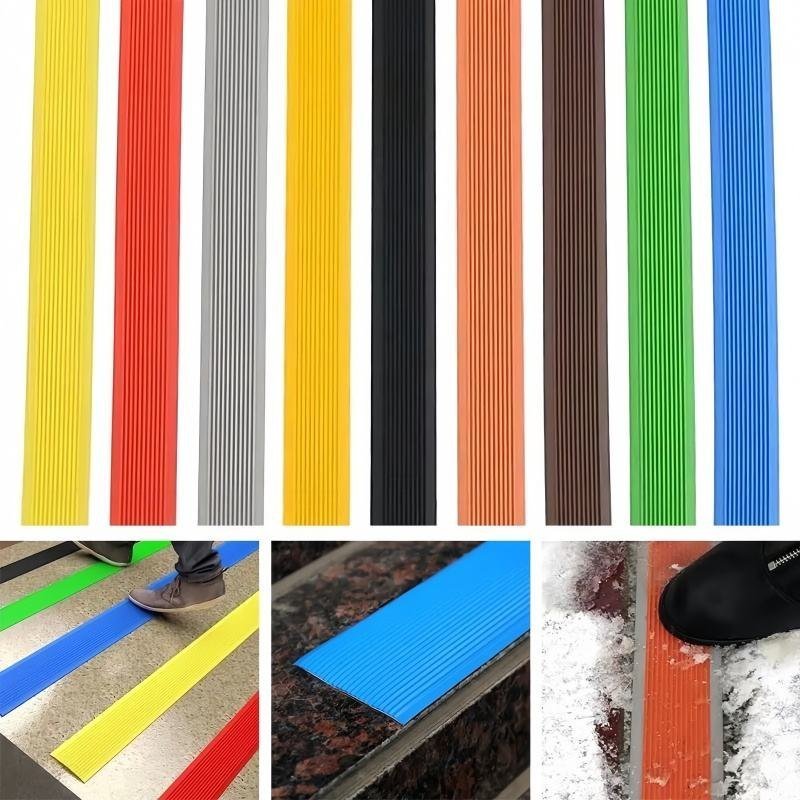
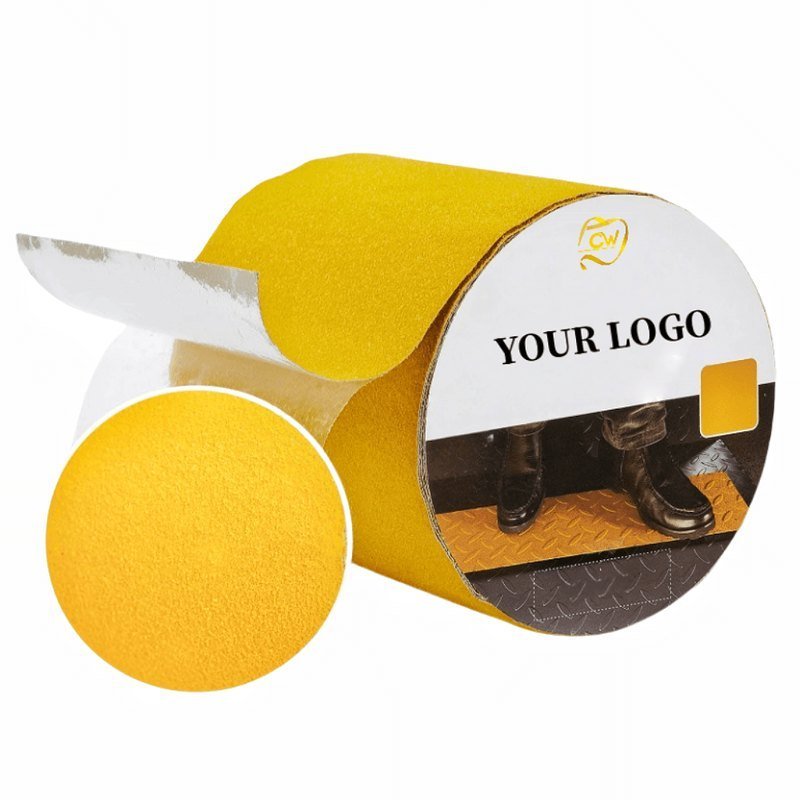
The grit number describes the abrasive particle size, not the amount of grip. A 60 grit surface is coarse and aggressive, an 80 grit is a general-purpose tread, and 120 grit is finer and easier to clean. Lower numbers give more bite but trap dirt, are harsh on bare feet and wear shoes faster, so they suit ramps and outdoor steps rather than retail interiors.
Thickness by traffic
Backing thickness controls how much grit stands proud of the surface and how well the tape follows a substrate. A 0.5 mm product is adequate for light foot traffic and smooth floors, 0.7 to 0.8 mm covers most commercial applications, and 1.0 mm or more is used where boots, trolleys or repeated washdowns are involved. Thicker is not automatically better: a thick tape creates a trip lip at its edge.
- 0.5 mm: offices, retail aisles, light pedestrian use
- 0.7 to 0.8 mm: stairs, entrances, kitchens, public buildings
- 1.0 mm and above: ramps, loading bays, outdoor steps, plant rooms
- Fine grit: barefoot and indoor areas; coarse grit: wet outdoor traffic
Reading a spec sheet properly
Look for the abrasive material, backing polymer, adhesive chemistry, total thickness, peel adhesion in newtons per 25 mm, and service temperature range. Slip resistance is measured with a friction test on the installed product, and results depend on the contaminant used, so a quoted figure without a method is not comparable. Floor classification schemes for coverings do not transfer directly to tape.
Matching product to application
Start with the substrate and the contaminant, then set grit, then thickness, then adhesive. A wet, oily workshop needs a coarse grit and an acrylic adhesive; a hospital corridor needs a finer grit and a low-profile backing that a mop will not catch. Document the choice on the purchase order so repeat orders and site audits refer to the same specification.