What polyimide tape is and where it earns its cost
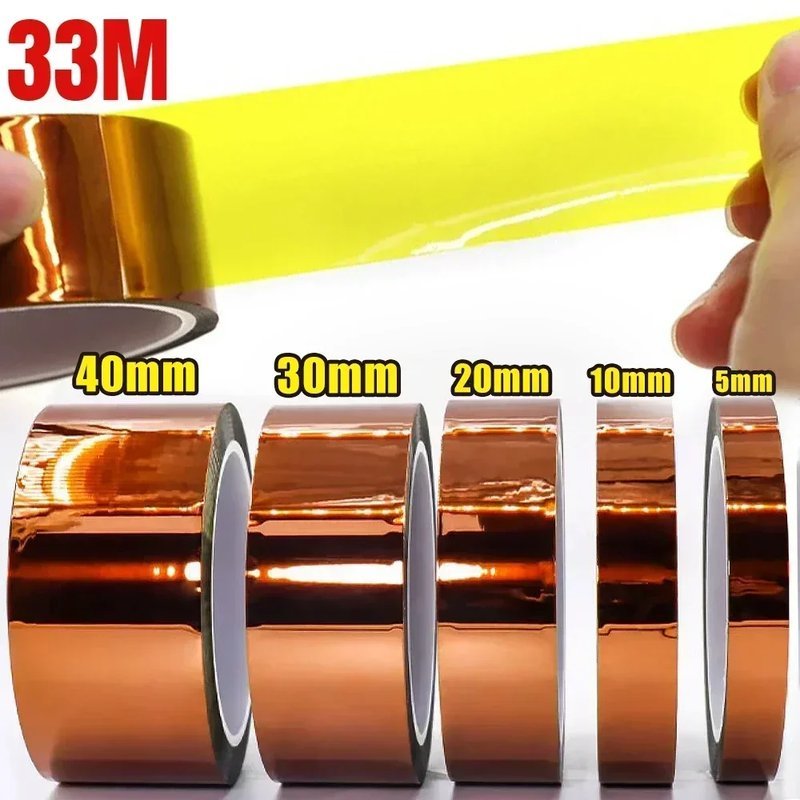
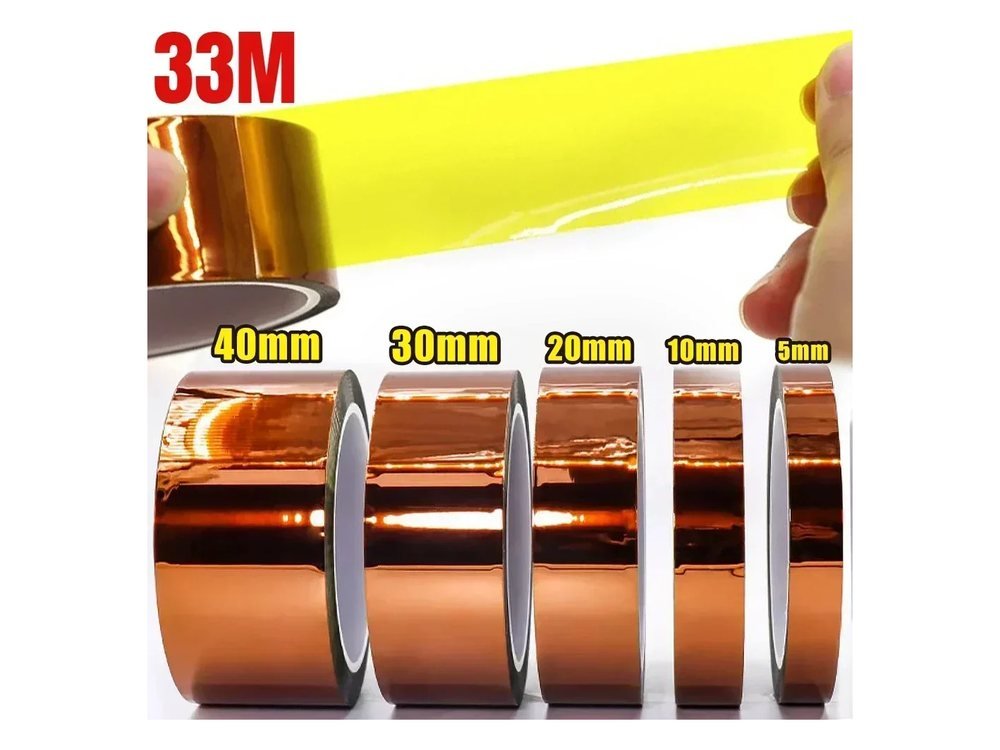
Polyimide film tape is an amber film, usually 25 to 50 microns, coated with a silicone adhesive. It holds dimensional stability at temperatures where paper chars and polyester shrinks, which is why it appears in electronics, wire harness work and 3D printing. The film is also electrically insulating, which matters in tightly packed assemblies.
Specifying film thickness and width
Polyimide tape for electronics is specified by film thickness first. Thin film conforms better and adds less height in a stack, while thicker film handles better and resists puncture. Widths from 6mm to 25mm cover most work, and 33m rolls are common. Check that the adhesive is silicone if the part will see soldering heat.
- Holding thermistors and sensors through a reflow or potting cycle.
- Masking gold fingers and connectors before conformal coating.
- Covering a print bed surface and holding the first layer edges.
- Insulating and bundling leads inside a tight enclosure.
Printers, soldering and reflow
Kapton tape for 3D printer beds is the same family of product. It holds a first layer edge, survives a hot nozzle passing nearby, and lifts without tearing the sheet. On a printer, replace it when the surface glazes rather than when it fails outright, because a glazed sheet gives inconsistent first layer adhesion.
Polyimide film tape 25mm wide is the common size for small boards, while high temp tape for soldering needs a silicone adhesive that does not creep at the tip. This is a hold and insulate product, not a structural fix, so a joint under load still needs a fastener.