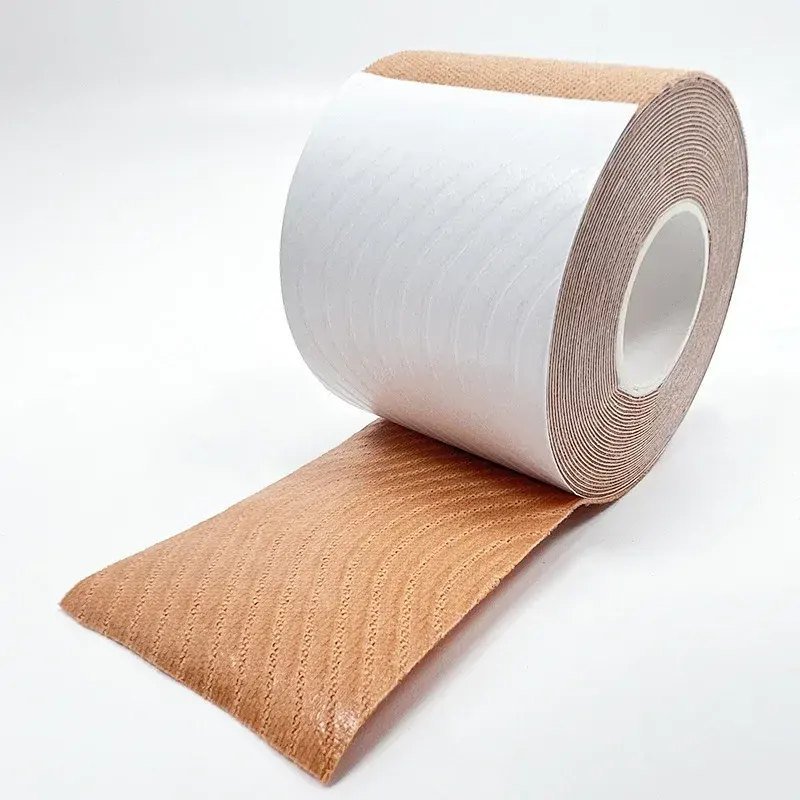

Paper tape on plaster and drywall
Interior masking tape is a thin crepe paper with a low to medium tack adhesive, designed to hold on porous plaster and cured emulsion without pulling the finish. On fresh paint the risk changes: most water based wall paints need several days to harden, and tape applied too early can print or delaminate the surface under its own adhesion.
Matching tack to the substrate
For masking tape for painting walls, tack level matters more than width. A low tack painter tape is the safe choice on newly decorated plaster, while a medium tack paper holds better on primed MDF and sealed skirting. On gloss or satin finishes, test a strip first, because a high tack paper can leave a dull shadow that no amount of buffing removes.
- Low tack for fresh emulsion, wallpaper and newly skimmed plaster.
- Medium tack for cured paint, primed MDF and sealed trim.
- Avoid high tack paper on gloss or satin finishes, where it can leave a shadow.
- Test a 200mm strip in a corner and remove it after 30 minutes.
Sealing the edge to stop bleed
Bleed happens when paint creeps under a tape edge that is not fully wet out. Press the tape with a plastic blade, then run a thin line of the wall colour along the tape edge and let it dry before cutting in the new colour. On textured walls, burnish only the edge and leave the rest of the tape relaxed so it does not lift.
Remove tape while the paint is still slightly soft, pulling back over itself at a low angle. A 25mm roll suits edges and a 48mm roll suits skirting, which gives the best coverage per roll on a house lot. Low tack masking tape for fresh paint should be labelled by substrate, not by price band.