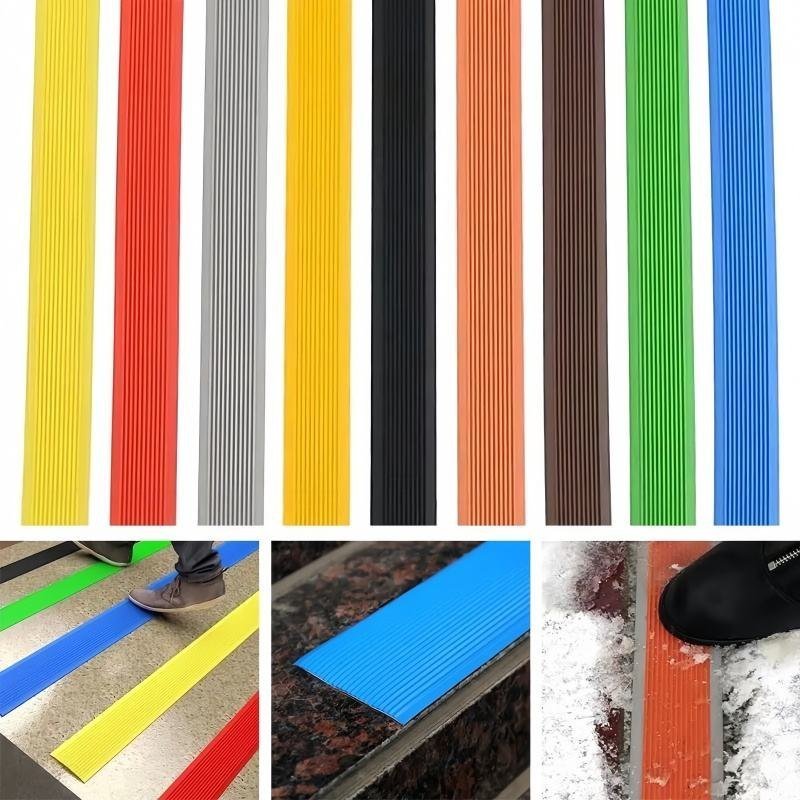

Every footstep pushes the tape forward and slightly sideways, and the leading edge takes the load. If that edge is not fully bonded, a tiny gap opens, water and grit enter, and the peel front advances with each pass. Most failures that look like adhesive failure are actually contact failures caused during installation.
Four common causes
The first is insufficient pressure: hand smoothing leaves far less contact than a roller. The second is application below the adhesive minimum temperature, which prevents wet-out. The third is a contaminated substrate, often from cleaning chemicals or curing compounds. The fourth is differential movement between a rigid tape and a flexible substrate, which shears the bond line.
- No roller used, so only the high spots are bonded
- Cold or damp surface at the time of application
- Square corners that catch boots, trolleys and mops
- Tape applied across a moving joint or expansion gap
Product choices that reduce risk
Rounded corners and a slightly thicker backing resist lifting at the corners. A rubber adhesive gives faster initial grab for a quick turnaround, while an acrylic adhesive holds better under heat and UV but benefits from a longer settling period before traffic. On timber or metal that moves, a conformable backing is more important than a higher peel value.
Diagnosing a failure on site
Look at the back of the lifted tape. A clean, glossy surface with no residue means the tape never bonded, so the problem is preparation or pressure. Adhesive transferred to the floor with a torn backing points to cohesive failure, often from heat or an incompatible substrate. Record the pattern, the substrate and the weather at installation, then change one variable at a time.