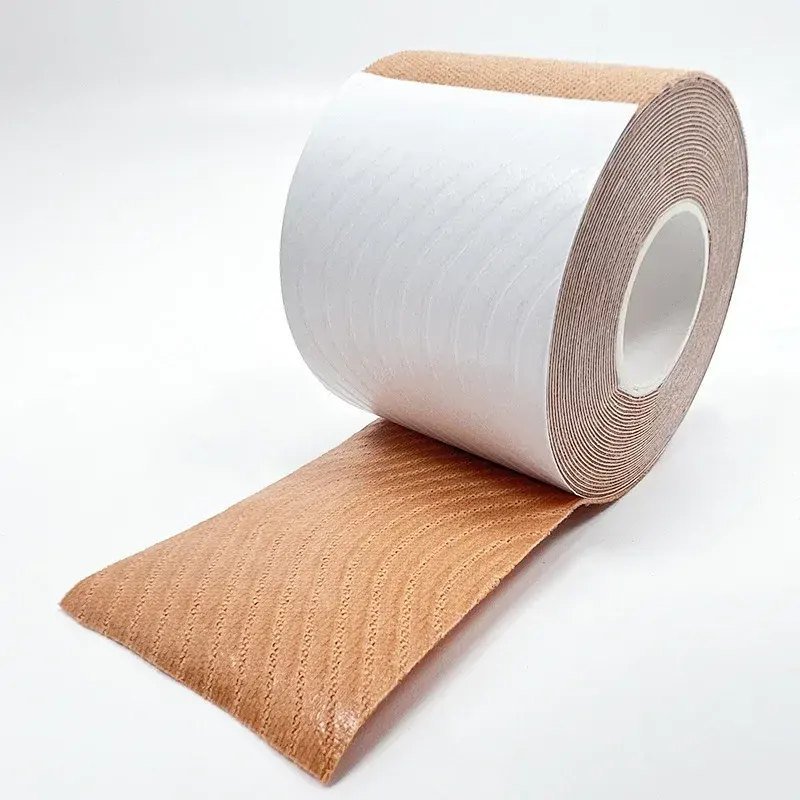

What micron actually measures
The micron figure is total calliper: film plus adhesive, measured before the roll is wound. It is not a purity grade, and two rolls at 45 micron can differ in how much of that thickness is backing. A tape with a 23 micron film and 22 micron adhesive layer behaves quite differently from one with a 30 micron film and 15 micron adhesive.
For most BOPP carton tape, film falls between 23 and 30 micron and adhesive between 18 and 25 micron. When a supplier quotes only total thickness, ask for the split. The film controls tensile strength and how the tape behaves in a dispenser, while the adhesive controls bond strength and contamination tolerance.
Where 40 and 50 micron diverge
Forty micron tape is the light hand-sealing grade. It conforms to slightly uneven flaps, cuts cleanly on a hand dispenser and keeps carton cost low for light goods. It is less forgiving on recycled board, tends to stretch under high dispenser tension and is a poor choice for machine sealing at speed.
Fifty micron tape carries more film and usually more adhesive, so it resists stretching, runs straighter through a case sealer and holds heavier boxes. The trade-off is stiffness: on a small mailer, a stiff tape can bridge the flap edge and lift instead of wrapping it.
- 40 micron: light cartons, hand sealing, short transit
- 45 micron: general purpose, hand or low-speed machine
- 50 micron: heavy cartons, automatic sealers, long transit
- Above 50 micron: check whether extra width is the better fix
Run a yield calculation before switching. Metres per roll at a given roll diameter drop as thickness rises, so a 50 micron roll closes fewer cartons than a 40 micron roll of the same physical size. Compare cost per sealed carton, not cost per roll.