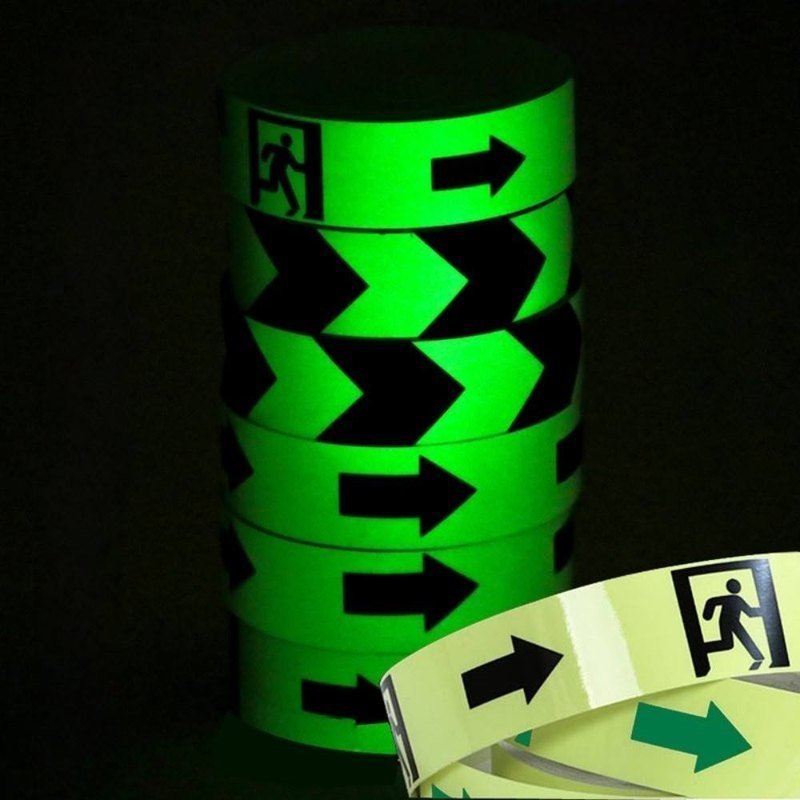
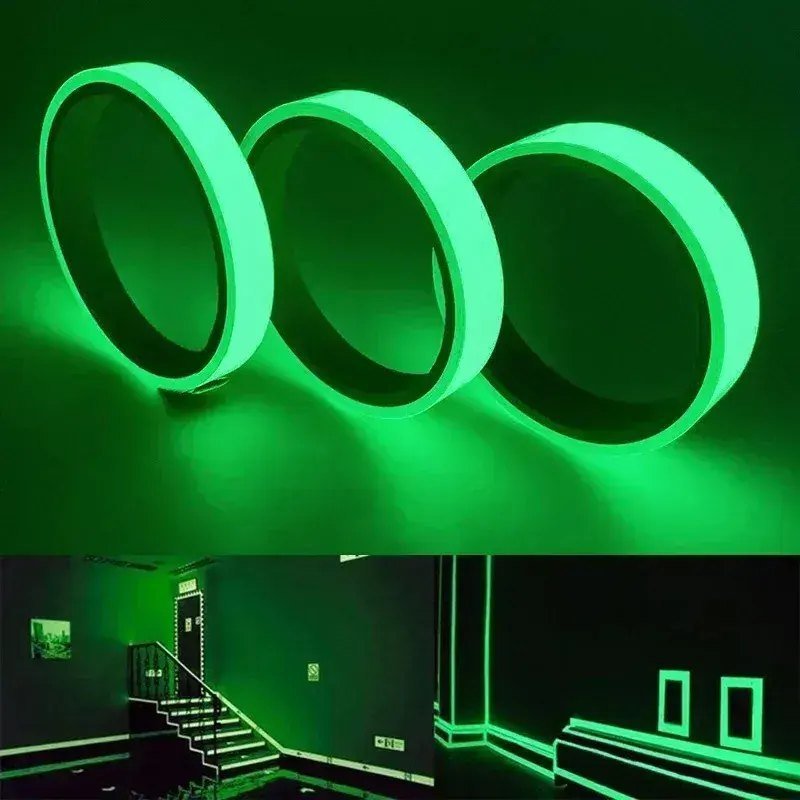
Photoluminescent tape contains a pigment that absorbs light and releases it slowly, without batteries or wiring. It does not glow indefinitely: brightness falls off within minutes and continues fading over hours. That decay is enough to mark a step edge during a power cut or overnight, provided the tape has been charged by normal ambient lighting during the day.
Placement that actually helps
The purpose is to make the edge of a step visible before a foot lands on it. Fit the strip along the nosing, set back slightly from the front lip so it does not wear against shoes, and continue the line across the full width of the tread. On landings, mark the leading edge rather than the middle, where it gives no warning of a change in level.
- Stair nosing: 50 mm strip, set back 10 mm from the front edge
- Landing edge: continuous line across the full width
- Handrail ends and door frames: 25 mm strip for orientation
- Dark car parks: combine with a grit surface for wet conditions
Choosing brightness and width
Photoluminescent pigments are classified by brightness and decay performance, commonly under the DIN 67510 system, which reports luminance at defined intervals after charging. A higher class stays visible longer but costs more. For a stair in a building with reliable lighting, a mid-range class is usually sufficient; for an escape route that may be dark for hours, specify the higher class.
Combining glow and grip
A combined product bonds grit over a photoluminescent layer, so the strip is visible and slip resistant at once. The grit reduces the exposed glowing area, which lowers measured brightness, so the product needs a brighter pigment to compensate. Check both values on the data sheet rather than assuming one product performs like the other.