What makes a tape detectable
A detectable warning tape is a polyethylene film with a thin aluminium foil core laminated inside. The foil is continuous along the roll, so a cable locator can pick it up from the surface before anyone puts a spade in the ground. Printed legends name the service underneath, which is the second layer of protection.
Plain warning tape without a foil core is only found by digging, so it protects the excavator who has already reached the danger zone. Detectable tape is found before excavation begins. For water, gas and telecom routes under roads or landscaping, the detectable version is normally the specified article.
Depth and position
The tape sits in the backfill above the service, not directly on the pipe or cable. Common practice is 150 mm to 300 mm above the utility, with the printed face upward so it reads correctly when uncovered. Deeper burial reduces the locator signal, and at more than about a metre the detection advantage largely disappears.
- Use 50 mm to 100 mm widths for trenches, wider for road crossings
- Keep the foil continuous; never join two rolls with a knot
- Lay the tape flat, with no twists that break the signal path
- Record the route and depth, and fit marker posts at changes of direction
The usual failure is mechanical. A foil core torn during compaction or pierced by a rock reads as a series of breaks, and a locator shows a route that stops mid-trench. Clean, fine backfill around the tape and hand compaction over the first layer prevent most of these faults.
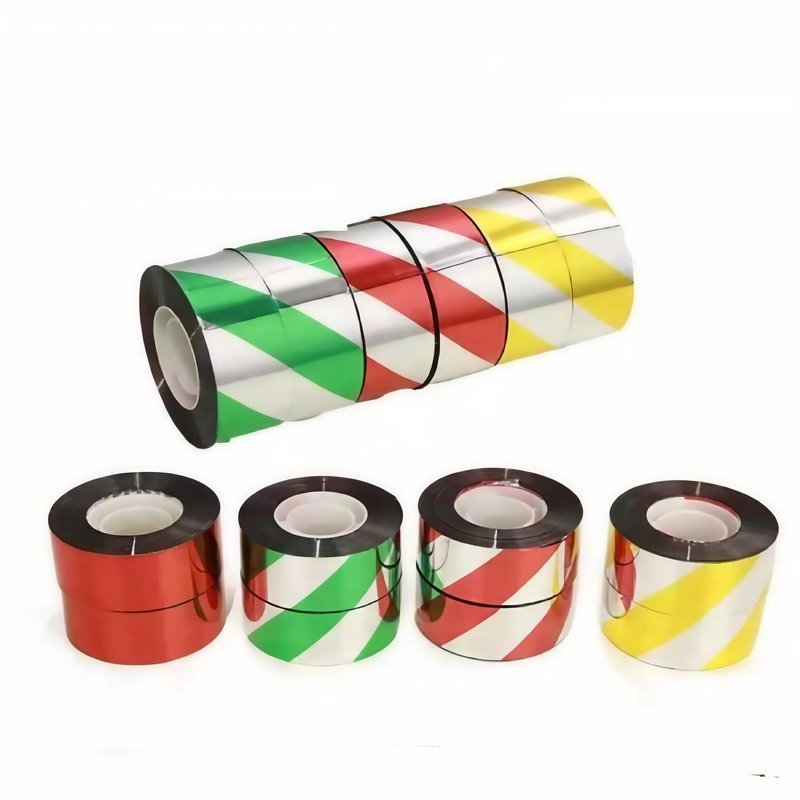
Colour should follow the local utility code: yellow for gas and oil, red for electric, blue for water, orange for communications. Export orders are usually 250 m to 500 m rolls, packed with a printed legend to the buyer's specification, since the wording is often set by the local authority.