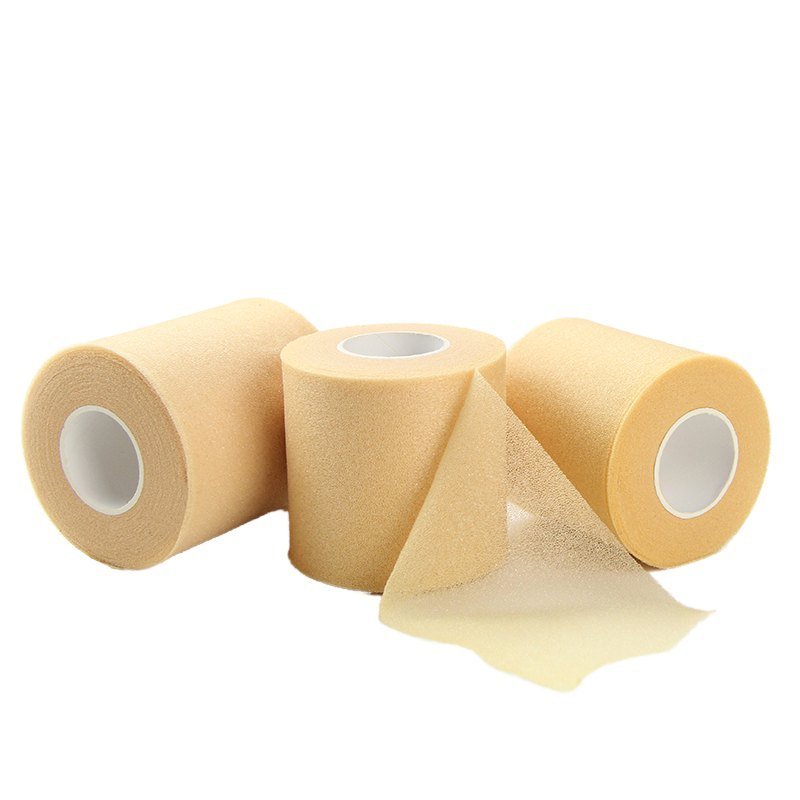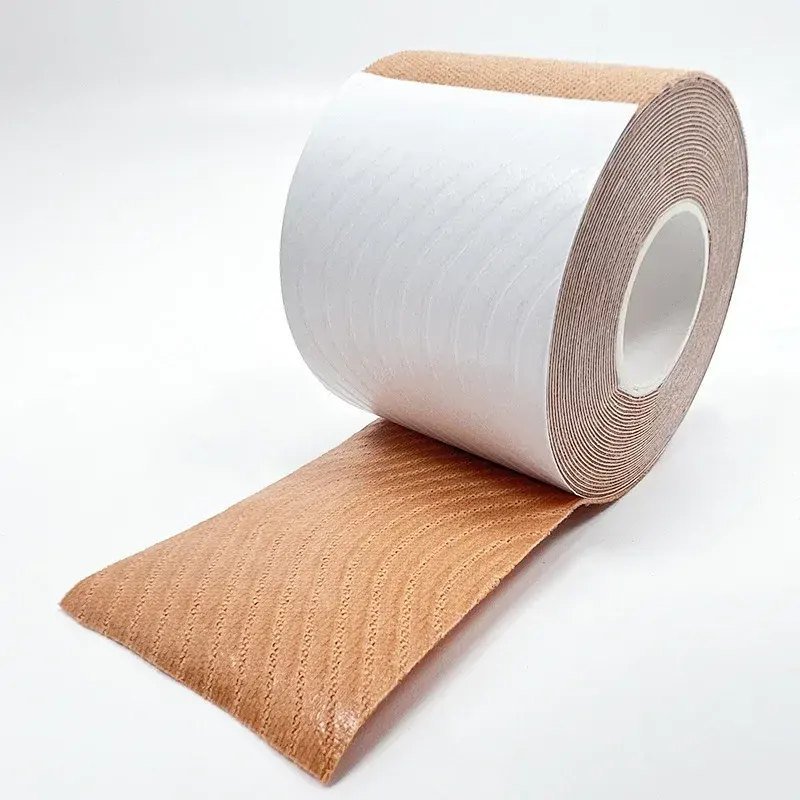

A badminton handle is gripped hard and rotated constantly, so sweat is pushed into the wrap rather than sitting on the surface. Once the top layer is saturated, the film of water between hand and tape does more damage to control than any loss of tack. That is why absorbency, not initial stickiness, is the useful measure for humid markets.
Absorbent versus tacky surfaces
Polyurethane foam grips absorb moisture into the cell structure and stay dry to the touch, while solid PU film grips rely on surface tack and become slick sooner. For players in tropical halls, a perforated foam with a light embossed pattern works best. For dry, air-conditioned halls, a tacky film grip gives a more direct feel and lasts longer.
Thickness and overlap change the feel
Badminton grips are commonly 0.5 to 0.75 mm thick and 25 mm wide, with 1.1 to 1.2 m per roll enough for one handle. Wrapping with a 50 percent overlap doubles the effective thickness and softens the handle; a 25 percent overlap keeps the bevels sharp. Suppliers should state the recommended overlap, because it changes how many rolls a player needs per season.
- 0.5 mm: direct feel, best for double players who rotate fast
- 0.6 mm: general purpose, good balance of cushion and control
- 0.75 mm and above: shock absorption for players with wrist strain
What to ask a supplier
Request the foam density, the adhesive type and the peel strength on a PU handle, plus a sweat absorption test result rather than a verbal claim. Check that the starting tape is a low-tack removable adhesive, so players can rewrap without tearing the foam. For club orders, grips are usually packed 10 to 12 per bag and 100 to 200 per carton, with colour assortments fixed at the time of order.